Brand Strategy · Verbal Identity · Visual Identity
Atlas
Institutional capability for professional services
The friction
Professional-services firms sell judgment that lives in individual heads, and walks out the door with them. Atlas was built to hold that judgment as architecture rather than habit — but it was built inside a working search practice, and it had inherited that firm’s lockup with a new name dropped in. The mark framed Atlas as a house sub-brand, which argued against the one thing that makes it valuable: that it can be lifted out and installed somewhere else.
The position
Institutional capability. Human-led, not human-replaced — a firm’s judgment encoded as an operating architecture, with people above the line making the decisions and agents below it doing the work. The identity had to separate cleanly from the house that built it and read as an asset in its own right.
The system
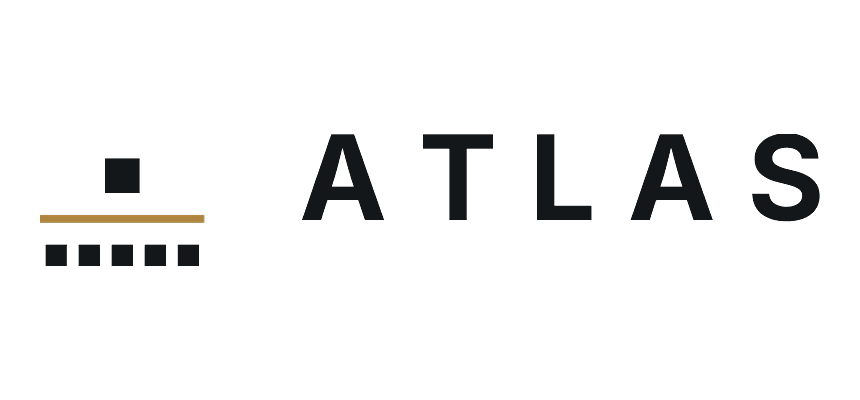
The mark is that hierarchy drawn plainly: a single solid form above a brass rule, five squares below it. The human sits above the governance line; execution happens beneath. Graphite and brass instead of the sector’s reflexive tech blue — closer to an institution than a startup, which is the register the buyer actually responds to. The wordmark is a grotesque at wide tracking, labels set in monospace, and the earlier star and italic are gone. No borrowed house style, no ornament.
The outcome
An identity that carries the separability argument on its own. Atlas now reads as a product that could be installed in any firm rather than a feature of the one that happened to build it — the distinction the entire proposition rests on.
Next case
Pebl →